
Table of Contents
You can make keto meal prep for busy women over 40 manageable with one 90-minute Sunday session: cook chicken and tofu, prepare a shared batch of vegetables, and portion five lunches with different dressings. Refrigerate your early-week meals and freeze Thursday’s and Friday’s cooked portions on Sunday.
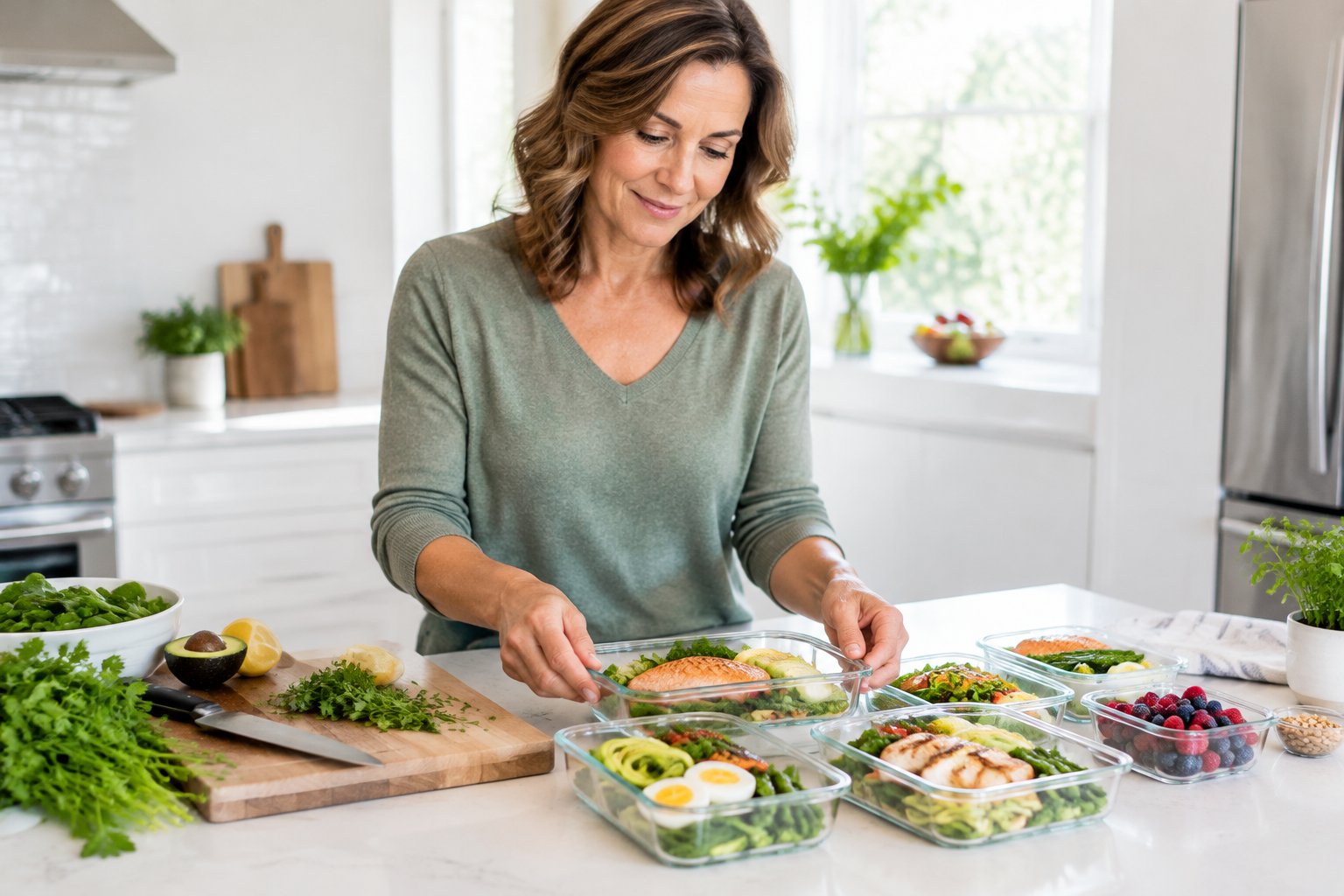
You get a crunchy salad, lettuce wraps, and three vegetable bowls without cooking lunch each morning. Your hands-on work fits around oven time, although safe cooling and freezing may extend beyond the 90-minute session.
During perimenopause, shifting hormones and elevated cortisol can make sustaining energy and managing stubborn belly fat feel difficult. A well-planned ketogenic diet or moderate low-carb diet can promote hormonal balance and support insulin sensitivity.
Focusing on nutrient-dense meals can also help combat chronic inflammation while keeping you satiated throughout busy workdays.
Before substantially reducing carbohydrates, speak with your clinician, especially if you take blood sugar or blood pressure medication. Your lunch choices also need to fit your full day’s intake; eating these meals alone does not establish ketosis or guarantee weight loss.
What Should You Buy for Five Keto Lunches?
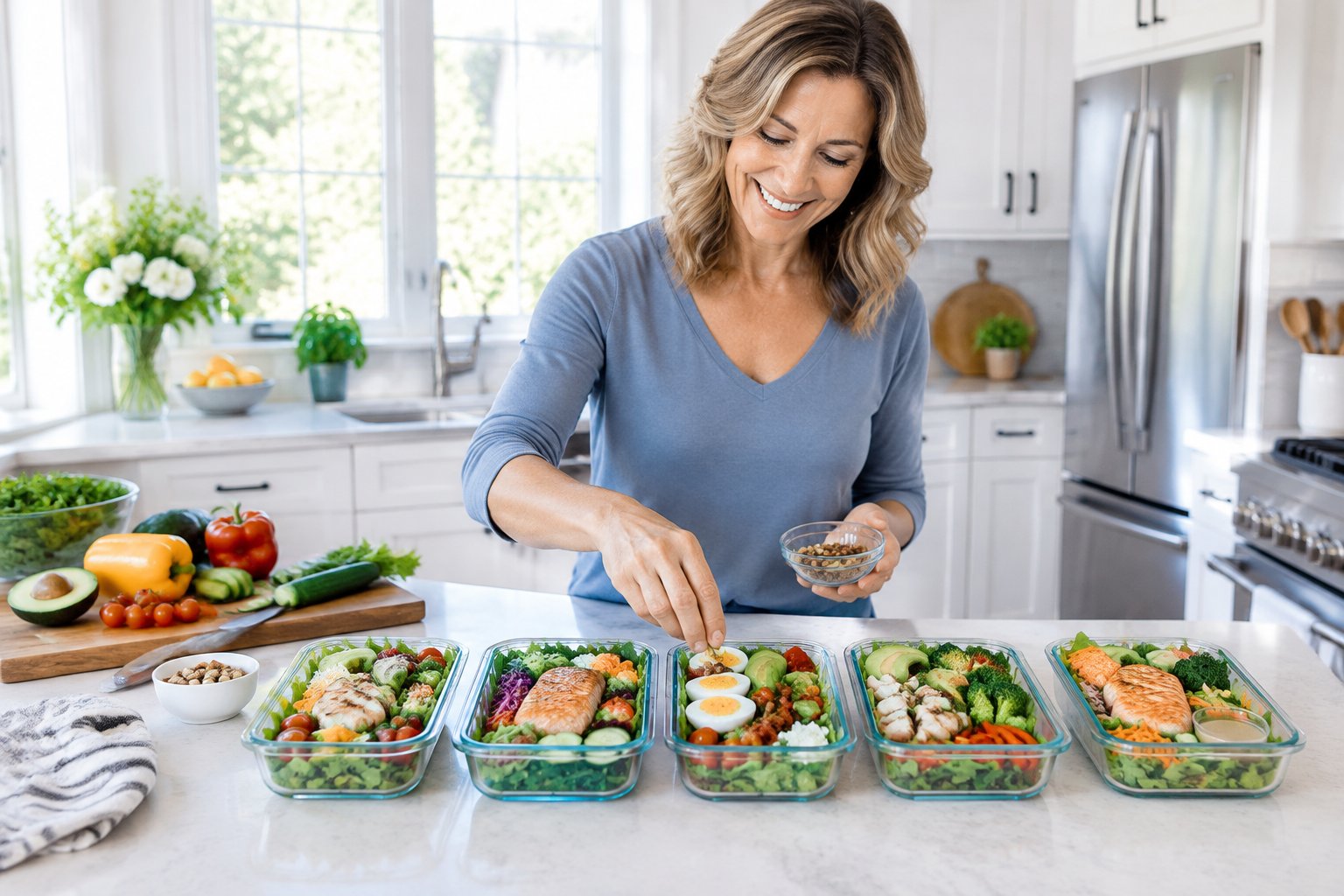
Buy enough chicken for three lunches and tofu for two, then reuse the same produce across different formats. You keep your keto shopping list manageable by changing the dressing and assembly each day.
The Shopping List and Quantities for One Person
Your batch yields five individual lunches. Allow 15 minutes for setup, 45 minutes for overlapping cooking tasks, and 30 minutes for dressing preparation, portioning, and cleanup; cooling continues as needed under refrigeration.
Buy the quantities below, or measure them from larger packages.
Proteins
- 1 pound boneless, skinless chicken breasts
- 16 ounces plain extra-firm tofu, drained
Vegetables and herbs
- 12 ounces broccoli florets
- 8 ounces zucchini, cut into half-moons
- 8 ounces plain cauliflower rice, fresh or frozen
- 3 cups shredded green cabbage
- 1 cup diced cucumber
- 6 large romaine or butter lettuce leaves
- ¼ cup finely chopped parsley or dill
Dressings and seasonings
- 6 tablespoons extra-virgin olive oil
- 1 teaspoon toasted sesame oil
- 3 tablespoons unsweetened tahini
- 6 tablespoons lemon juice, from about 3 lemons
- 1 tablespoon rice vinegar
- 2 teaspoons reduced-sodium soy sauce or tamari
- 1 teaspoon Dijon mustard
- 2 teaspoons garlic powder
- 1 teaspoon fine salt, divided
- ½ teaspoon black pepper, divided
- 3 tablespoons water for the tahini dressing, plus more as needed
Set out two rimmed sheet pans, a large skillet, a meat thermometer, measuring spoons, and separate cutting boards for raw chicken and produce. You also need five shallow meal containers, small dressing pots, and freezer-safe packaging for the later-week portions.
Choosing Protein, Low-Carb Vegetables, and Unsaturated Fats
Maintaining adequate protein intake is essential for preserving lean muscle mass as metabolic rate shifts with age. Keeping carbohydrates low enough supports ketosis while giving your body reliable energy. Give each lunch a substantial protein portion: one-third of your cooked chicken batch or half of your tofu batch. Cooked chicken portions should weigh roughly 4 ounces, though cooking losses vary.
Use cabbage and broccoli to contribute fiber, with lettuce and cucumber adding fresh texture. Cruciferous vegetables also support healthy estrogen metabolism during midlife. You still need to count vegetable carbohydrates within your personal daily allowance.
Measure your olive oil and tahini before portioning. These ingredients provide healthy fats that fit your daily keto macros. Measuring keeps your dressings consistent without requiring you to add extra fat solely to reach a percentage target.
You can also incorporate other nourishing keto foods like sliced avocado or a sprinkle of chopped walnuts. Walnuts provide essential omega-3 fatty acids, boosting flavor, heart health, and satiety. Rich in omega-3 fatty acids, these nutrient-dense fats help keep midday cravings at bay.
Easy Vegetarian, Dairy-Free, and Budget-Friendly Swaps
Your base plan is dairy-free. For a vegetarian week, replace the chicken with another 24 ounces of extra-firm tofu, giving you five 8-ounce tofu portions; cook the additional tofu in batches.
For keto on a budget, use frozen broccoli and cauliflower rice, shred cabbage yourself, and compare chicken prices by weight. Boneless chicken thighs or fatty fish, such as wild salmon or mackerel, also fit these versatile keto recipes. Lean cuts of grass-fed beef or roasted lamb offer deeply flavorful, iron-rich protein alternatives.
If sesame is unsuitable for you, replace each tahini serving with an olive-oil-and-lemon dressing and omit the sesame oil. Recalculate the nutrition whenever you change protein brands or dressing ingredients.
Your 90-Minute Sunday Prep Session
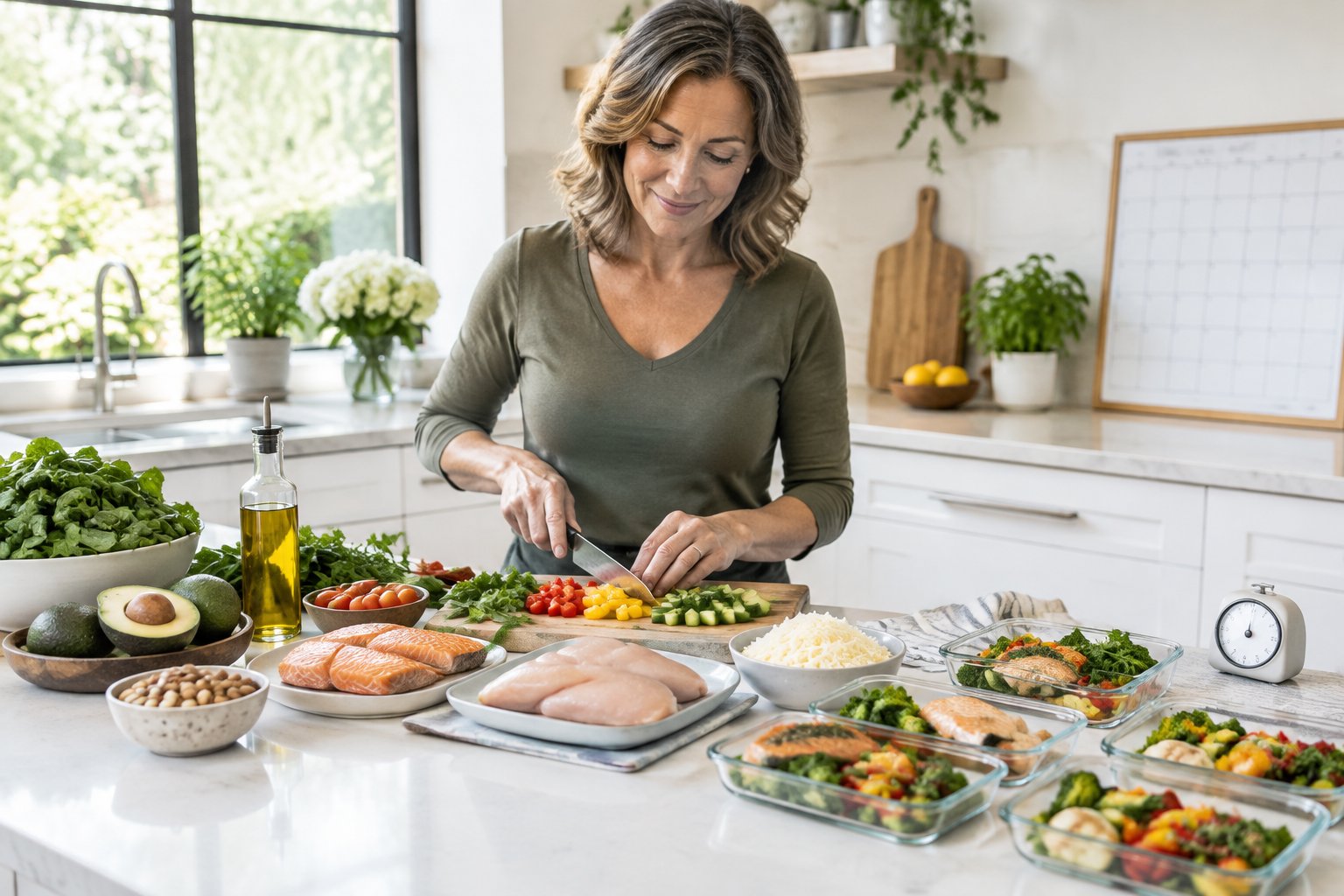
Start your chicken and vegetables early, then use the stovetop for tofu and cauliflower rice while the oven runs. Keep your work area organized so cooked food moves into shallow containers promptly.
Minutes 0–15: Set Up, Chop, and Preheat
- Preheat your oven to 425°F. Line both sheet pans and clear refrigerator space so containers have room for cold air to circulate.
- Wash your produce and dry your lettuce thoroughly. Measure the cabbage and cucumber, then refrigerate them separately from the ingredients you will cook.
- Drain your tofu, blot it firmly with a clean towel, and cut it into bite-size cubes.
- Prepare your chicken last. Cut thick breasts horizontally into evenly sized cutlets, without rinsing the raw meat.
- Wash your hands and sanitize the chicken preparation area before handling anything ready to eat.
Label your containers Monday through Friday. Add the preparation date to your freezer portions so you can identify them without opening each package.
Minutes 15–60: Cook Proteins and Vegetables in Parallel
- Season your chicken: coat it with 1 teaspoon olive oil, 1 tablespoon lemon juice, 1 teaspoon garlic powder, ¼ teaspoon salt, and ⅛ teaspoon pepper. Arrange it on its own sheet pan.
- Season your vegetables: toss the broccoli and zucchini with 1 tablespoon olive oil, ½ teaspoon garlic powder, ¼ teaspoon salt, and ⅛ teaspoon pepper. Spread them on the second pan.
- Roast both pans, placing the chicken below the vegetables. Check your vegetables after 20 minutes and remove them when tender with browned edges.
- Check your chicken after about 20 minutes. Continue cooking until its thickest part reaches 165°F; thickness determines the final cooking time.
- Meanwhile, heat 2 teaspoons olive oil in your skillet over medium-high heat. Add the tofu with the remaining ½ teaspoon garlic powder, ¼ teaspoon salt, and ⅛ teaspoon pepper. Cook for 10–15 minutes, turning until lightly browned.
- Transfer your tofu to shallow containers. In the same skillet, heat 1 teaspoon olive oil and cook the cauliflower rice for 5–7 minutes, or until hot and the excess moisture has evaporated.
Keep your cooked chicken separate from raw-meat utensils. If your oven cooks unevenly, rotate the pans when you check the vegetables.
Minutes 60–90: Make Dressings, Portion, and Start Safe Cooling
Prepare your keto-friendly dressings and sauces in separate small containers:
- Monday’s lemon dressing: whisk 2 teaspoons olive oil, 2 tablespoons lemon juice, and 1 teaspoon Dijon mustard.
- Wednesday’s herb dressing: combine 1 tablespoon olive oil, 1 tablespoon lemon juice, and ¼ cup chopped herbs.
- Tuesday’s and Friday’s lemon tahini: whisk 3 tablespoons tahini, 1 tablespoon olive oil, 2 tablespoons lemon juice, and 3 tablespoons water. Divide equally between two pots.
- Thursday’s sesame dressing: combine 1 tablespoon olive oil, 1 teaspoon toasted sesame oil, 1 tablespoon rice vinegar, and 2 teaspoons soy sauce or tamari.
Divide your remaining ¼ teaspoon salt and ⅛ teaspoon pepper among the dressings to taste. If you prefer less salt, leave the remainder unused.
Slice your chicken and divide it into three equal portions. Split your tofu into two equal portions, then assemble the cooked components as described below.
Move cooked food into shallow containers and refrigerate promptly. Keep raw salad ingredients separate from warm food, and finish chilling your Thursday and Friday portions before transferring them to the freezer that Sunday.
Five Distinct Lunches From Your Prepped Ingredients
You have five single-serving lunches with different textures and flavors from the same batch. Your nutrition figures below are approximate planning estimates based on standard ingredient values; check your package labels, especially for tofu and tahini.
For your tracking, net carbs means total carbohydrate minus dietary fiber. Your actual portions and brands determine the final totals.
Monday: Lemon Chicken and Crunchy Cabbage Salad
Use this ingredient allocation for one lunch:
- 1 chicken portion, approximately 4 ounces cooked
- 1½ cups shredded cabbage
- ½ cup diced cucumber
- All of your lemon-Dijon dressing
- Place your cabbage and cucumber in a dry container.
- Pack your chilled chicken separately or in a divided compartment.
- At lunch, add the chicken and toss everything with the dressing.
Your estimated lunch provides about 35–38 grams of protein and 5–7 grams of net carbs. Eat it cold after keeping it properly refrigerated.
Tuesday: Tofu and Roasted Broccoli Bowl With Tahini
Use this ingredient allocation for one lunch:
- Half your cooked tofu batch, from 8 ounces drained tofu
- Two-thirds of your roasted broccoli, from 8 ounces raw
- Half your lemon-tahini dressing
- Portion your tofu and broccoli together in a shallow container.
- Pack the tahini dressing in a separate pot.
- Eat the bowl chilled, or reheat the cooked components to 165°F before adding the dressing.
Your estimated lunch provides about 25–35 grams of protein and 8–12 grams of net carbs. Your tofu label has a substantial effect on these totals, so calculate this bowl once using the brand you buy regularly.
Wednesday: Chicken Lettuce Wraps With Herb Dressing
Use this ingredient allocation for one lunch:
- 1 chicken portion, approximately 4 ounces cooked
- 6 large lettuce leaves
- ½ cup shredded cabbage
- ½ cup diced cucumber
- All of your herb dressing
- Store your dry lettuce leaves in their own container with a clean paper towel.
- Combine your chilled chicken with the cabbage and cucumber in a second compartment.
- Spoon the filling into the leaves at lunchtime and drizzle with herb dressing.
Your estimated lunch provides about 35–38 grams of protein and 3–5 grams of net carbs. Keeping your leaves separate prevents the filling from making them limp.
If you prefer a smaller side portion, pack some cucumber as keto-friendly vegetable snacks. Pairing them with a few walnuts gives you easy keto snacks without affecting your main chicken allocation.
Thursday: Tofu Cauliflower Rice Bowl With Sesame Dressing
Use this ingredient allocation for one lunch:
- Half your cooked tofu batch, from 8 ounces drained tofu
- All your cooked cauliflower rice, from 8 ounces
- 1 cup shredded cabbage
- All of your sesame dressing
- Freeze your tofu and cauliflower rice together on Sunday after prompt chilling.
- Keep your cabbage refrigerated in a separate dry container and freeze the dressing in its own pot.
- Thaw the frozen components in your refrigerator beginning Wednesday.
- Reheat your tofu and cauliflower rice to 165°F, then add the cabbage and dressing.
Your estimated lunch provides about 22–32 grams of protein and 7–11 grams of net carbs. Add the cabbage after reheating to preserve its crunch.
Friday: Chicken and Roasted Vegetable Bowl With Lemon Tahini
Use this ingredient allocation for one lunch:
- 1 chicken portion, approximately 4 ounces cooked
- Your remaining roasted broccoli, from 4 ounces raw
- All your roasted zucchini, from 8 ounces raw
- Half your lemon-tahini dressing
- Portion your chicken with the broccoli and zucchini.
- Chill promptly, then freeze the bowl and its separate dressing pot on Sunday.
- Transfer both to your refrigerator on Thursday to thaw.
- Reheat the cooked components to 165°F, stir the dressing, and spoon it over your bowl.
Your estimated lunch provides about 38–42 grams of protein and 8–11 grams of net carbs. If your thawed tahini dressing looks thick, stir in a little water until it pours.
How Do You Keep Lunches Safe and Fresh All Week?
Refrigerate your Monday-through-Wednesday cooked portions and freeze your Thursday and Friday portions on Sunday. Use your refrigerator and a properly chilled lunch bag to maintain safe temperatures between preparation and eating.
What to Refrigerate and What to Freeze for Thursday and Friday
Keep your refrigerator at 40°F or below and your freezer at 0°F. Use refrigerated cooked leftovers within three to four days, counting from preparation day.
Refrigerate cooked food within two hours, or within one hour when the surrounding temperature exceeds 90°F. You do not need to leave food on the counter until it reaches room temperature; small, shallow containers help it cool under refrigeration.
Keep your fresh lettuce, cabbage, and cucumber out of the freezer. Inspect your raw produce before packing, and discard anything slimy or spoiled.
Packing Cold Lunches for the Commute
Pack your meal straight from the refrigerator into an insulated bag with at least two cold packs, positioned around the food. Transfer it to a workplace refrigerator when you arrive.
Use a leak-proof meal-prep container with a secure lid, plus a separate dressing pot. Your container prevents spills; your ice packs and refrigerator control temperature.
Count unrefrigerated time across your whole trip and lunch break. Discard perishable food that has exceeded the safe time limit, even if it smells normal.
Thawing, Reheating, and Keeping Dressings Separate
Thaw your frozen lunches in the refrigerator overnight. If the center remains frozen, allow more refrigerator time or use your microwave’s defrost setting immediately before reheating.
Reheat your cooked components to 165°F throughout. Cover loosely, stir or rotate partway through, and check several places with a food thermometer.
Keep your lettuce and cold toppings away from the microwave. Add dressing after reheating, and stir any thawed dressing that has separated.
Make One Prep Session Carry Your Workweek
Your Sunday session gives you five portioned lunches, with the later-week cooked meals protected in the freezer. Keep the same basic workflow next week and change one dressing or vegetable if you want variety.
These five workday meals can also serve as the foundation of a complete 7-day keto meal plan for women over 40. Integrating these prepped lunches into a structured 7-day meal plan takes the guesswork out of busy workweeks. Pair them with quick weekend proteins, leafy salads, and eggs to create a balanced 7-day keto meal plan for women that maintains ketosis effortlessly.
Use this closing checklist before you leave the kitchen:
- You have three early-week lunches refrigerated and two later-week cooked portions frozen.
- You have packed dressings separately and labeled your containers.
- You have scheduled Wednesday and Thursday refrigerator-thawing reminders.
If your available time shrinks, use lazy keto meals built from prepared protein and plain vegetables. Keep the same portioning and cold-storage routine.
Some women also explore cyclical keto around their monthly cycle, shifting carbohydrate intake strategically to support fluctuating hormones while targeting stubborn belly fat.
Frequently Asked Questions
Use your portions and ingredient labels to adapt this lunch plan to your daily carbohydrate allowance. Keep the storage schedule unchanged when you make substitutions.
Can I use this lunch plan if I’m new to keto?
Yes, you can use these lunches as a beginner-friendly starting point, provided the portions fit your daily nutrition needs. When starting a keto diet after 40, review major dietary changes with your clinician and count carbohydrates from the rest of your day too.
As your body adapts to ketosis, staying hydrated and replenishing electrolytes can also help minimize early fatigue or symptoms of the keto flu. Sipping warm bone broth provides comforting minerals, while taking magnesium glycinate in the evening supports muscle relaxation and restorative sleep.
Can I make all five lunches vegetarian?
Yes, replace your pound of chicken with an additional 24 ounces of extra-firm tofu. Divide your total 40 ounces of drained tofu into five portions, cook it in batches, and recalculate protein and net carbs using your package label.
How can I track net carbs without tracking every meal?
Calculate each lunch once from your measured ingredients, save those entries, and reuse them whenever you repeat the recipe unchanged. To avoid common keto meal-plan mistakes, update your saved totals when you change tofu brands, sauces, or portion sizes; lunch totals alone do not show your full day’s carbohydrate intake.
What can I buy ready-made if I cannot prep on Sunday?
Buy plain cooked chicken, unseasoned ready-to-eat tofu, bagged slaw, washed lettuce, and steam-in-bag vegetables. Check preparation dates and labels for added sugar or starch, then portion and refrigerate everything promptly.
Can I print the shopping list and prep schedule?
Yes, use your browser’s Print command to print the shopping-list and Sunday-prep sections, or copy those sections into a document. Include the five lunch ingredient allocations and your freezing reminders so your printed version contains the full portioning plan.